
RFID Label Detecting Encoding Machine Guide 2026 | Zowinda
RFID Label Detecting & Encoding Machine: A 2026 Buyer's Guide
Published: August 02, 2026 | Category: RFID Label Production Equipment
RFID labels power modern inventory tracking, asset management, and supply-chain visibility. But a label only delivers value if the inlay is correctly placed, the chip is fully functional, and the encoded data matches the item. An RFID label detecting & encoding machine combines detection, encoding, and verification in one reel-to-reel process, helping manufacturers move from raw inlay material to ready-to-ship labels at high speed. This 2026 buyer's guide explains how the technology works, what specifications matter, and how to choose a system that fits your production goals.
Why RFID Label Detection and Encoding Matter in 2026
As RFID adoption accelerates in retail, logistics, healthcare, and manufacturing, label converters face two competing pressures: higher throughput and lower defect rates. A single bad label can break a pallet-level tracking chain, cause a retail checkout failure, or trigger a rejected shipment. Manual inspection and benchtop encoding cannot keep pace with reel-to-reel volumes.
An integrated RFID label encoding machine solves this by feeding labels continuously, reading each inlay, writing the required EPC or NDEF data, and then verifying that the data can be read back. Detection modules catch physical defects such as missing chips, damaged antennas, or placement errors before the labels reach the customer. The result is a roll of labels that is fully encoded, verified, and ready for application.
Investing in automated detection and encoding also reduces labor costs and rework. Operators load a roll of pre-converted labels, start the job, and monitor output through a PC-based interface. The system logs each label's UID and encoded data, creating a traceability record that supports quality audits and compliance programs.
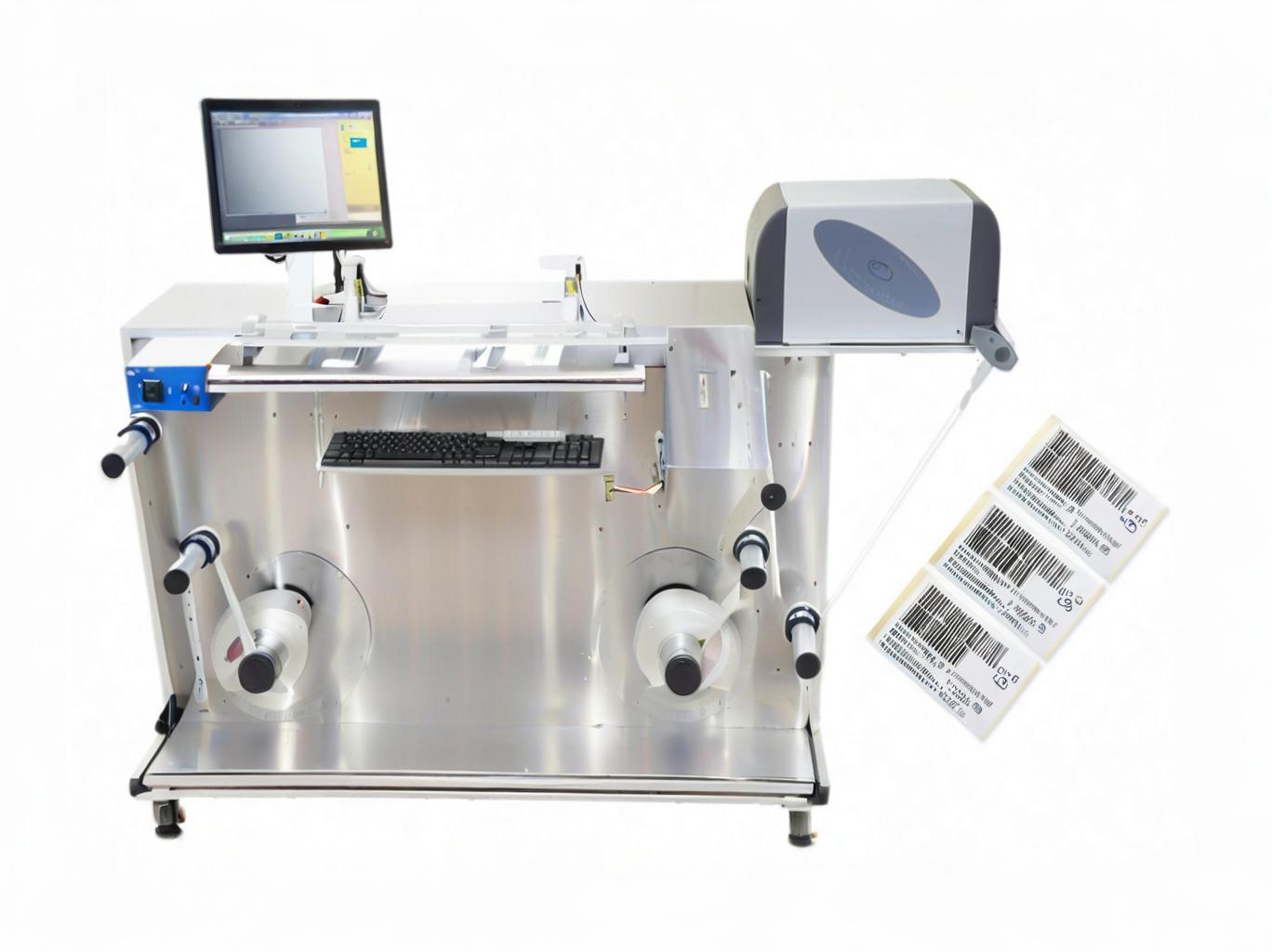
Figure 1: Zowinda RFID label detecting & encoding machine handling reel-to-reel RFID labels
How the Zowinda RFID Label Detecting & Encoding Machine Works
The Zowinda all-in-one RFID inlay production ecosystem covers everything from antenna embedding to final label finishing. The detecting and encoding station sits near the end of the line, where it receives rolls of labels that already contain RFID inlays.
The workflow follows four controlled stages:
- Unwind and Tension Control: A servo-driven unwind section feeds the label roll while a tensioning roller maintains stable web tension. Consistent tension prevents label skew, antenna misalignment, and registration drift during encoding.
- Detection: As each label passes the detection station, sensors inspect the inlay for presence, position, and antenna continuity. Missing or damaged inlays are flagged for rejection before encoding resources are spent.
- Encoding: An RFID reader/writer encodes the chip with the required data. The machine supports both HF (13.56 MHz) and UHF (860-960 MHz) standards, so it can handle NFC labels, retail RFID tags, and industrial UHF asset labels on the same platform.
- Verification and Rewind: A second read station verifies that the encoded data is readable and matches the target record. Good labels continue to the rewind section; failed labels are marked or removed.
Optional modules expand the system's capability. A barcode scanner can cross-check printed barcode data against the RFID EPC, ensuring that both identifiers remain synchronized. An inkjet print station can add human-readable text, lot codes, or variable graphics after encoding.
Key Features That Improve Reel-to-Reel Label Production
High-Speed Servo Drive
The machine uses precision servo motors for feeding and recycling labels, maintaining smooth motion even at maximum throughput. This reduces mechanical vibration that can disturb inlay positioning.
Dual-Station Encoding
Optional double-station encoding splits the read and write operations across two positions, improving accuracy and allowing higher line speeds without sacrificing data integrity.
Flexible Frequency Support
Whether you produce HF NFC labels for consumer engagement or long-range UHF labels for logistics, the reader configuration can be matched to your tag protocol.
PC-Based Control
An industrial PC hosts the operating software, giving operators an intuitive interface for job setup, data import, encoding rules, and production reporting. Recipe storage speeds changeovers between label formats.
These features make the system suitable for both dedicated high-volume lines and job-shop environments that switch between label sizes and data formats several times per day.
Upstream and Downstream Equipment in the RFID Line
A complete RFID label manufacturing line includes multiple specialized machines. Before detection and encoding, the inlay must be assembled. An RFID flip chip system attaches the chip to the antenna substrate, while an RFID inlay sample bonding machine handles sample bonding and small-lot validation. After encoding, labels may pass through die-cutting, inspection, and packaging stations.
Choosing equipment with compatible web widths, data interfaces, and control architectures simplifies integration. Zowinda designs its machines to share common mechanical interfaces and software conventions, which reduces the engineering effort required to link stations into a continuous line.
Industry Applications and Real-World Use Cases
RFID label detecting and encoding systems are used wherever high volumes of labeled items need unique digital identities. Common applications include:
- Logistics and Shipping: Encode shipping labels with unique IDs so parcels can be tracked through sorting hubs and delivery networks without line-of-sight scanning.
- Retail Apparel: Source-tag garments at the label converter so stores can use RFID for inventory counts, replenishment, and loss prevention.
- Asset Tracking: Produce durable RFID asset labels for IT equipment, tools, vehicles, and reusable containers in industrial environments.
- Healthcare: Encode labels for specimen tracking, medication management, and medical-device traceability.
- Manufacturing: Apply work-in-process labels that carry serial numbers and quality data through assembly and final test.
A typical logistics deployment starts with a roll of blank labels that already contain inlays. The detecting and encoding machine writes a unique EPC to each label and verifies readability. A barcode scanner option ensures that the printed barcode and RFID data remain synchronized. The finished roll is then sent to an automatic label applicator or converted into individual labels for hand application.
Technical Specifications
Frequently Asked Questions
What is the main function of an RFID label detecting & encoding machine?
The machine automatically detects, encodes, and verifies RFID labels in a continuous reel-to-reel process. It ensures that every label contains a functional inlay and that the encoded data is readable and accurate before the labels ship.
Which RFID frequencies does it support?
The system supports both HF (13.56 MHz) for NFC and payment-style labels and UHF (860-960 MHz) for long-range logistics and retail applications. The reader module can be configured to match your tag requirements.
Can the machine handle different label sizes?
Yes. The web path accepts label widths from 20 mm to 130 mm, and software presets allow operators to recall job parameters when switching between label formats. Adjustable guides and tension controls help maintain accuracy across sizes.
How does verification work?
After encoding, a separate read station attempts to read the label. If the data does not match the target record or the label is unreadable, the system flags it for rejection. This closed-loop verification prevents defective labels from reaching the customer.
Is the encoding data customizable?
Yes. Operators can import data sets from CSV, XML, or host systems and define encoding rules for each job. This supports serialized EPCs, variable product data, and customer-specific identifier schemes.
Choosing the Right Configuration for Your Line
When specifying an RFID label detecting and encoding machine, start with your tag protocol and production volume. HF/NFC lines generally require precise near-field coupling, while UHF lines need antennas tuned to regional frequency bands. Confirm that the reader supports the specific chip family you plan to encode.
Next, evaluate throughput. The published speed is useful, but real throughput depends on encoding retry behavior, verification time, and label spacing. Ask the supplier for a throughput estimate based on your target data size and inlay layout.
Finally, consider integration. A standalone machine may be sufficient for a small converter, but high-volume operations benefit from linking detection and encoding to upstream inlay assembly and downstream finishing. Matching control interfaces and web-path dimensions across machines reduces integration risk.
Streamline Your RFID Label Production
Contact Zowinda for a detailed proposal, sample evaluation, or line integration review. Our engineers can recommend the right detecting, encoding, and verification configuration for your RFID label workflow.
Email: [email protected]
WhatsApp: +86 186 2085 0485
 RFID vs NFC Smart Cards: Compl
 Statistical Process Control fo
Hydraulic vs Servo-Electric La
Smart Card Module Embedding: C
Statistical Process Control fo
Hydraulic vs Servo-Electric La
Smart Card Module Embedding: C
Please contact us with your request
We are ready to answer your questions.