
RFID vs NFC Smart Cards: Complete Guide 2026 | Zowinda
RFID vs NFC Smart Cards: Complete Guide 2026 | Zowinda
RFID and NFC are the two wireless technologies behind nearly every contactless smart card in use today, from office badges and transit passes to payment cards and product authentication tags. If you are specifying hardware, planning a deployment, or simply trying to understand how they work, this guide explains exactly how RFID vs NFC compare in frequency, read range, speed, security, and cost, and shows which one fits the most common real-world projects.
What Is RFID?
Radio-frequency identification (RFID) uses radio waves to read data stored on a tag without any direct line of sight. A reader emits an electromagnetic field; a passive tag draws the small amount of power it needs from that field and returns its stored identifier or payload. RFID is a mature, standards-driven technology that scales from a few cents per tag to rugged industrial systems.
RFID operates across three main frequency bands. Low frequency (LF, 125 to 134 kHz) offers short range and good performance near metal and liquid, which is why it appears in animal tags and tool tracking. High frequency (HF, 13.56 MHz) is the band used by most contactless smart cards and by NFC. Ultra-high frequency (UHF, 860 to 960 MHz) delivers read ranges of several meters, making it the default for logistics, laundry, and supply-chain inventory.
RFID is also well standardized, which is why readers and tags from different vendors usually interoperate. HF cards follow ISO or IEC 14443 for proximity smart cards and ISO or IEC 15693 for vicinity cards, while UHF logistics tags follow EPC global Gen2. Those standards let a single reader support many card types across an enterprise, which keeps a large deployment from being locked to one supplier.
What Is NFC?
Near-field communication (NFC) is a standards-based subset of HF RFID that operates at 13.56 MHz. What makes NFC different from ordinary RFID is its interactive mode set. It supports card emulation, where a phone acts as a contactless card; peer-to-peer exchange, where two devices swap data by tapping; and reader or writer mode, where a phone reads or writes a tag. Those modes are what power mobile payments and quick device pairing.
NFC is deliberately limited to a range of roughly ten centimeters or less. That short range is not a weakness, it is a design choice. By keeping the coupling distance tiny, NFC makes accidental or remote reads far less likely, which is exactly what you want for a payment credential or a secure access badge.
The NFC Forum defines the interoperability rules and the operating topologies that make the technology useful. Card emulation lets a phone act as a payment or transit card, peer-to-peer mode swaps data between two powered devices with a tap, and reader or writer mode interacts with passive tags and posters. Because the specs are shared, an NFC phone, a payment terminal, and a badge reader can all speak the same language without custom firmware on either side.
RFID vs NFC: The Key Differences
The simplest way to frame RFID vs NFC is that all NFC is a form of RFID, but not all RFID is NFC. NFC is pinned to the 13.56 MHz HF band and adds two-way, tap-to-interact behavior, while RFID as a whole spans LF, HF, and UHF with mostly one-way reader-to-tag communication. The practical differences show up in five places.
- Frequency: RFID covers LF, HF, and UHF; NFC is fixed at 13.56 MHz HF.
- Read range: LF and HF RFID reach a few centimeters, UHF reaches several meters, and NFC stays under about 10 cm by design.
- Interaction: RFID is usually one-way (reader reads tag); NFC adds peer-to-peer and card emulation.
- Data rate: NFC reaches up to 424 kbps, HF RFID about 106 kbps, and UHF can exceed 640 kbps.
- Security posture: NFC short range plus payment-grade encryption schemes reduces skimming risk; long-range UHF needs extra shielding or cryptography to stay safe.
Cost follows the same split. UHF tags are the cheapest at volume, which is why they dominate pallet and carton tracking. HF and NFC inlays cost a little more, but they are the only practical choice when the card must support secure tap transactions or phone-based credentials.
Which Technology Should You Choose?
Choosing between RFID and NFC is really a question of range, interaction, and threat model rather than a simple quality ranking. Use the guidance below as a starting point.
- Access control and employee badges: choose HF 13.56 MHz, usually NFC-compatible, for reliable tap-and-go entry.
- Public transit and event ticketing: choose NFC or 13.56 MHz HF for fast, secure taps at the gate.
- Inventory, laundry, and supply-chain tracking: choose UHF RFID for meters of read range and high throughput.
- Consumer payment and phone wallets: choose NFC exclusively, since that is what handsets and terminals speak.
- Industrial asset tracking near metal or liquid: choose LF RFID, which penetrates those materials better than HF or UHF.
If your project needs a credential that a smartphone can also emulate, NFC is the clear answer. If your project needs to read hundreds of items across a warehouse in seconds, UHF RFID is the clear answer. Many modern card programs actually combine both, using 13.56 MHz HF or NFC for the secure front-end badge and UHF for behind-the-scenes asset tracking.
Where teams get stuck is treating the decision as permanent. RFID and NFC readers are cheap enough that a site can run both side by side, and a 13.56 MHz HF card is readable by dedicated RFID hardware and by NFC phones at the same time. Designing for that overlap up front keeps future upgrades, like adding phone-based credentials, from requiring a forklift replacement of the whole system.
How ZOWINDA Builds RFID and NFC Cards
A contactless card starts as a PET or PVC sheet. An RFID or NFC inlay, an antenna plus a bonded chip, is then embedded into the sheet, laminated, milled to expose the chip, and personalized with printing and encoding. ZOWINDA supplies the full production chain for this workflow, from the inlay itself to the machines that bond and encode it.
For teams building their own cards or labels, the All-in-One RFID Inlay provides a pre-laminated HF or UHF inlay that drops straight into card and label constructions. The RFID Automatic Flip Chip System bonds the chip die onto the antenna at high yield, and the RFID Label Detecting and Encoding Machine verifies and encodes reels of finished labels before they ship. Together these three steps turn raw material into a ready-to-use contactless product.
Throughput and yield matter as much as the technology choice. A missed bond or a mis-encoded reel becomes scrap only after lamination, so in-line detection and encoding verification are built into the ZOWINDA line. That is why the detecting and encoding step sits right after bonding, catching faults before the card is sealed rather than after it ships to a customer.
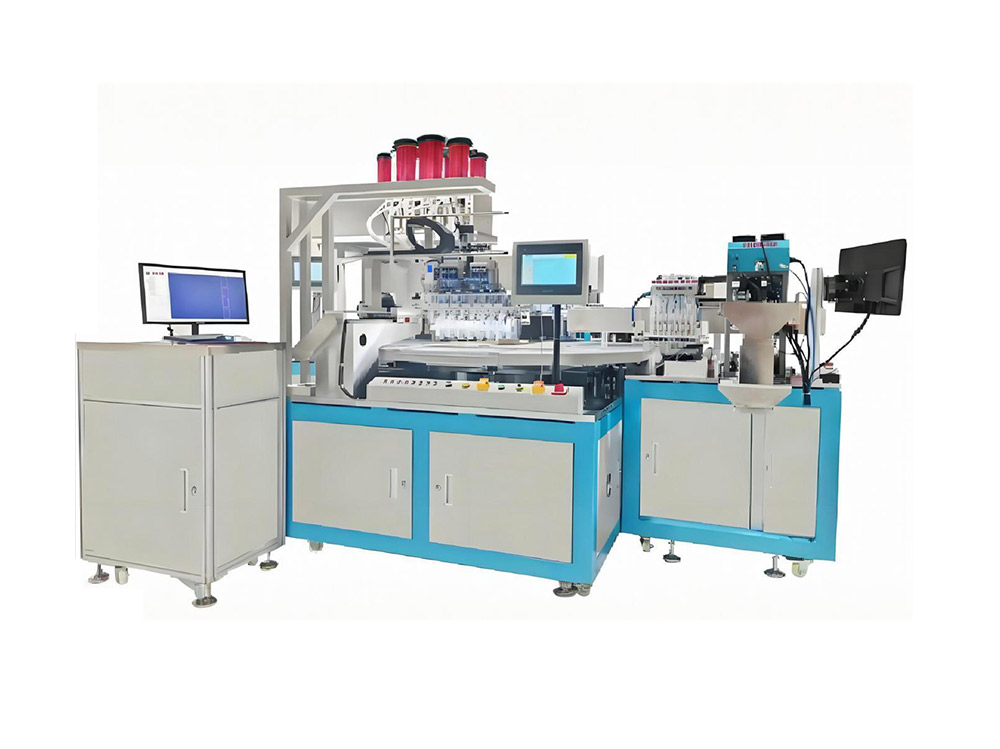
ZOWINDA RFID and NFC Production Equipment
| Equipment | Category | Frequency | Primary role |
|---|---|---|---|
| All-in-One RFID Inlay | Inlay | 13.56 MHz HF / UHF | Pre-laminated inlay for cards and labels |
| RFID Automatic Flip Chip System | Bonding | 13.56 MHz | Die bonding onto the antenna |
| RFID Label Detecting and Encoding Machine | Encoding | HF / UHF | Reel-to-reel detect and encode |
Common RFID and NFC Misconceptions
Two myths cause most specification mistakes. The first is that NFC is always more secure than RFID. In practice, security depends on the chip, the encryption, and the overall system design, not only on range. A poorly configured NFC payment applet can be as risky as an unencrypted UHF tag. The second myth is that RFID and NFC cannot coexist. In fact, most 13.56 MHz HF deployments are readable by both dedicated RFID readers and NFC phones, which is why mixed fleets of badges and handsets work so well together.
The other frequent error is over-buying range. Teams sometimes specify UHF because it sounds more capable, then discover that its meters of read distance create collisions and accidental reads in a crowded office. Matching the range to the use case, usually HF or NFC for people-facing credentials, is the more reliable path than maximizing distance by default.
Frequently Asked Questions
Is NFC the same as RFID?
NFC is a specialized form of HF RFID that runs at 13.56 MHz. So every NFC system is RFID, but not every RFID system is NFC, because RFID also includes LF and UHF bands and mostly one-way communication.
Can an NFC phone read an RFID card?
A modern NFC phone can read HF 13.56 MHz cards, which is the band most contactless smart cards share with NFC. It generally cannot read LF animal or tool tags, nor long-range UHF RFID, because those use different frequencies and modes.
Which is more secure, RFID or NFC?
NFC is usually the safer choice for credentials because its centimeter-scale range makes remote skimming difficult, and payment uses strong encryption. Long-range UHF RFID is not insecure by default, but it needs proper shielding or cryptography to prevent unintended reads at distance.
What frequency do smart cards use?
Most contactless smart cards use 13.56 MHz HF, the same band as NFC. That is why a single reader can often handle both a classic HF smart card and an NFC phone credential.
How are RFID and NFC cards made?
Production runs as inlay embedding, flip-chip or wire bonding of the chip to the antenna, lamination, precision milling to expose the chip, and finally personalization plus encoding. ZOWINDA equipment covers each of those steps end to end.
Contact ZOWINDA
Still deciding between RFID and NFC for your cards or labels? The ZOWINDA team can help you match the right frequency, inlay, and production equipment to your application. Email us at info@zowinda.com or reach us on WhatsApp at +86 186 2085 0485, and we will help you scope a build that fits your volume and budget.
 RFID vs NFC Smart Cards: Compl
 Statistical Process Control fo
Hydraulic vs Servo-Electric La
Smart Card Module Embedding: C
Statistical Process Control fo
Hydraulic vs Servo-Electric La
Smart Card Module Embedding: C
Please contact us with your request
We are ready to answer your questions.