
Smart Card Print Color Management: ICC Profiles, Spot Colors and Proofing
Smart Card Print Color Management: ICC Profiles, Spot Colors and Proofing
Publish date: 2026-09-10
Card printing sells on colour. A bank's blue, an operator badge's red, a transit logo's green - all must match the brand file run after run, on a glossy or matte PVC surface that behaves nothing like paper. This guide covers the colour-management workflow that keeps card print on-spec and off the reject pile.
Why Card Colour Is Harder Than Paper
Card substrates are not paper. PVC, PET-G and PC have different white point, gloss and ink absorption, so the same CMYK values print a different colour than on a brochure. Add a protective overlay that shifts hue after lamination and a metallic or translucent card body, and colour can drift between the proof and the finished card even when the file is identical. Colour management exists to close that gap.
ICC Profiles: Mapping Intent to Substrate
An ICC profile describes how a device reproduces colour on a specific substrate. A card printer needs a profile built for its ink set and the exact card material, not a generic paper profile. With the right profile, the same design prints the same colour on two different presses, which is what lets a brand approve a master and trust every reorder.
- Build the profile on the real card stock, not a surrogate substrate.
- Re-profile when ink, overlay or press change - they all shift colour.
- Use the profile in the design workflow, not just at the RIP.
✔ Substrate profile
Characterises the card material's true colour response.
✔ Press profile
Captures this machine's ink and dot gain behaviour.
✔ Soft proof
Predicts the result on screen before any card is made.
Spot Colours vs Process Colour
Brand-critical colours are usually specified as spot colours (for example a Pantone reference) rather than built from CMYK, because process mixing varies with dot gain and calibration. For cards, a spot ink or a dedicated station gives a repeatable match that process colour alone cannot guarantee, especially on glossy surfaces where dot gain is unpredictable.
- Use spot ink for logo and brand colours that must be exact every run.
- Reserve process CMYK for photographs and gradients.
- Agree a tolerance with the brand - aim for a delta-E, not a guess.
Proofing: From Screen to Physical Card
A proof is the contract between designer and printer. A calibrated soft proof predicts colour on screen; a physical card proof confirms it on the real substrate after lamination. Both must be viewed under a controlled light booth, because the same card looks different under office fluorescent, daylight and retail LED. Without a booth, 'looks right' is not evidence.

Card printing station where ICC profiling and spot colours hold brand colour across the run.
Measuring, Not Guessing: Densitometry and Spectro
Colour drift is gradual, so it must be measured on a schedule. A densitometer tracks ink density; a spectrophotometer reads the actual colour and reports delta-E against the approved standard. Logging these per shift turns 'the colour looks off' into a numeric trend that is corrected before a whole batch is rejected.
- Measure density and delta-E per shift, not only at setup.
- Log by press position; drift often starts at one edge.
- Set a delta-E reject limit with the brand up front.
Selection Quick Reference
Card colour management is measurement plus discipline: profile the real substrate, reserve spot ink for brand colour, proof under a controlled booth, and log delta-E per shift. Producers who do this ship cards whose colour the brand recognises on the first card of every run, not the fifth reject.
Ready to improve your production efficiency?
Contact us for a tailored solution and quotation.
Email: info@zowinda.com
WhatsApp: +86 186 2085 0485
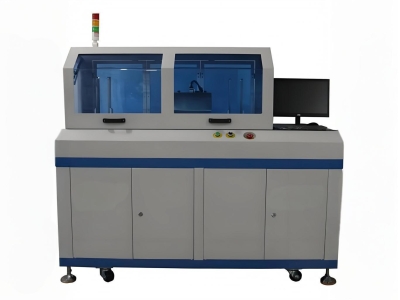 IC Card Data Verification Mach
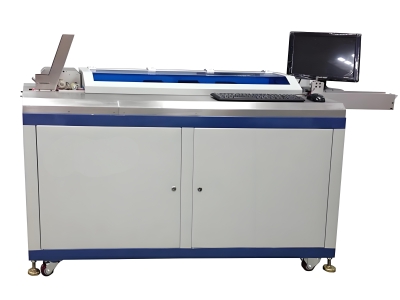 Contactless Card Product Testi
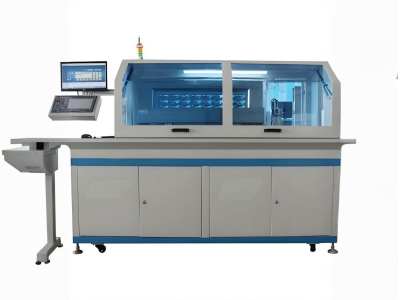 IC Card Personalization Machin
 Full Auto Milling & Implan
Please contact us with your request
We are ready to answer your questions.