
HF vs UHF RFID Inlay Encoding: Frequency Bands, Read Range and Production Trade-offs
HF vs UHF RFID Inlay Encoding: Frequency Bands, Read Range and Production Trade-offs
Publish Date: 2026-08-26
Choosing between High-Frequency (HF, 13.56 MHz) and Ultra-High-Frequency (UHF, 860-960 MHz) RFID inlays is one of the most consequential decisions in a smart-label production line. The two technologies differ not only in physics but in encoding workflow, equipment, and downstream application fit. This guide breaks down the trade-offs so engineers and buyers can match the band to the use case.
Understanding the Two Frequency Bands
HF RFID operates at 13.56 MHz and uses inductive (near-field) coupling. Its read range is typically 1 cm to 1 m, making it ideal for secure, short-distance interactions such as access control, payment cards, and library tagging.
UHF RFID spans 860-960 MHz (region-dependent) and uses radiative (far-field) coupling. With the right antenna and reader, it reaches 5-12 m, enabling bulk reading of hundreds of items per second in logistics, retail, and apparel supply chains.

HF and UHF RFID inlays require different antenna geometries and encoding stations.
HF: Stable, Secure, Short-Range
Inductive coupling is less sensitive to liquids and metals, delivering reliable reads on nearby objects. Perfect for personalized cards and tickets.
UHF: Fast, Long-Range, High Throughput
Radiative coupling supports multi-tag inventory at distance, the backbone of warehouse and retail RFID rollouts.
Encoding Workflow Differences
HF encoding writes to ISO 14443 / 15693 memory blocks via a contactless encoder station. Data is often locked per block, and personalization (UID, keys) happens inline with printing.
UHF encoding programs EPC memory and user banks using air-interface commands. Because reads are fast, encoding is frequently batched in roll-to-roll tunnels with inline verification to reject poorly written tags.
Inline Verification is Non-Negotiable
Both bands benefit from 100% read-back verification; a single mis-encoded inlay in a roll can bankrupt a shipment's yield.
Antenna Tuning Matters More at UHF
UHF inlay performance is dominated by antenna impedance matching; small etching tolerances shift read range significantly.
Production Trade-offs and Equipment
HF lines favor precision encoder modules integrated with card personalization: module implant, milling, and chip bonding happen in the same cell.
UHF lines favor roll-to-roll encoding tunnels with antenna insertion (wire embedding or etched inlay lamination) followed by high-speed verification. The equipment footprint and yield model are different, but both converge on the same quality gate: verified, unique, locked data.
Choose HF for Identity & Payment
Where security and tap interaction matter, HF remains the default.
Choose UHF for Tracking & Inventory
Where volume and distance dominate, UHF wins on cost-per-read.
Ready to Boost Your Production Efficiency?
Contact us for a tailored solution and quotation
Email: info@zowinda.com
WhatsApp: +86 186 2085 0485
 Automatic 3D Curved Antenna Em
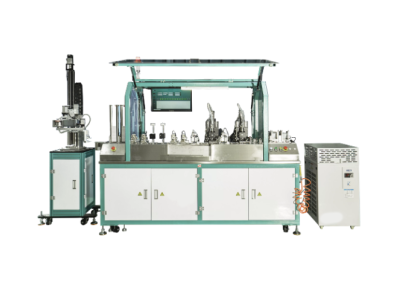 Automatic Module Testing Machi
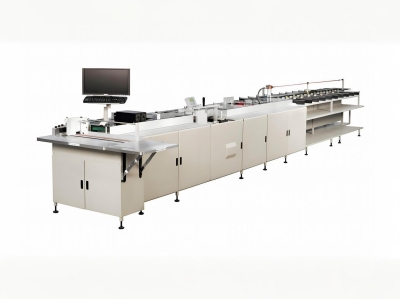 Auto Envelope Sealing and Labe
 Automated Card Sealing Labelin
Please contact us with your request
We are ready to answer your questions.