
RFID and NFC Card Manufacturing: The Complete Process from Inlay to Finished Card
RFID and NFC Card Manufacturing: The Complete Process from Inlay to Finished Card
Published: 2026-08-13 | Zowinda Industry News
RFID and NFC cards look simple, yet turning a blank plastic sheet into a reliable, encode-ready smart card is a multi-stage manufacturing flow. Understanding each station helps buyers specify the right production line and avoid the quality pitfalls that surface only after cards fail in the field.
1. Inlay Manufacturing: The Heart of the Card
Every contactless card starts with the inlay - a precisely placed antenna (typically etched copper or printed silver) bonded to a chip module. The antenna geometry determines read range and frequency behavior, so inlay production demands tight tolerances. Roll-to-roll lamination embeds the inlay between PVC or PETG layers, fixing it permanently inside the card body.
2. Lamination and Cutting
Stacked sheets are laminated under heat and pressure to fuse layers without air gaps, then milled and punched to the CR80 format. Poor lamination causes delamination and weak antenna joints - the leading cause of intermittent contactless reads. Automated cutting keeps edges clean and dimensions consistent across millions of units.
3. Printing and Personalization
Surface printing (offset or dye-sublimation) carries brand and identity artwork. Personalization then writes the unique data: a contact chip is programmed through its module, while a contactless chip is encoded over the air after lamination. This is the stage where a generic card becomes a specific credential.
4. Encoding, Inspection and Verification
After encoding, every card must be checked. Vision inspection catches print and surface defects; data verification re-reads the chip to confirm the written record matches intent. Skipping these gates is how silent encoding errors propagate into an entire bad batch. Zowinda lines integrate inspection and verification as inline quality gates rather than separate manual steps.
5. Why the Full Chain Matters for Buyers
A production line is only as strong as its weakest station. A fast personalizer paired with a weak inspector still ships defects. Specifying matched, integrated stations - and verifying each - is what separates a line that merely runs from one that reliably yields good cards. See our complete buyer's guide for a full equipment checklist.
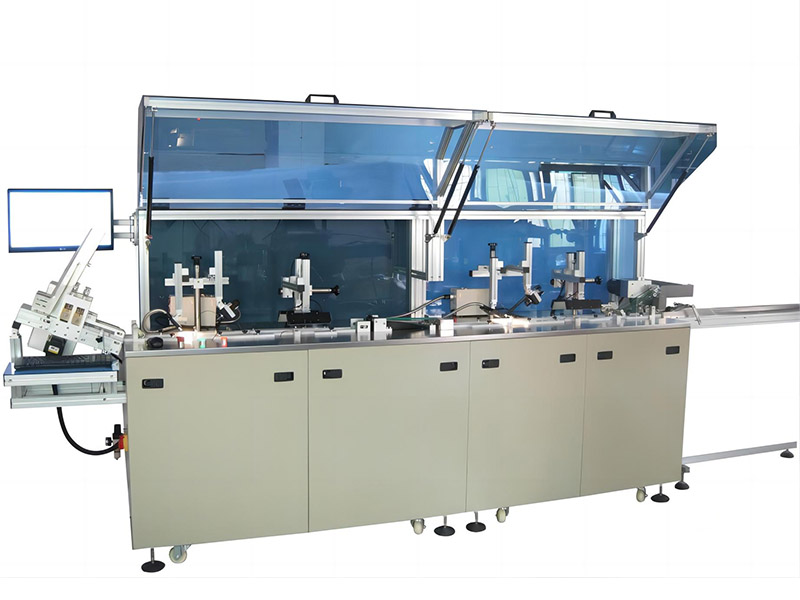
Zowinda smart-card production equipment on the manufacturing floor.
Key Takeaways
Inline Integration
Stations share transport and data so cards move without manual hand-offs.
Antenna Tolerances
Precise inlay placement controls read range and frequency response.
100% Inspection
Vision + data verification catch defects before shipping, not after.
Material Flexibility
PVC, PETG and composite substrates supported across the line.
At a Glance
Frequently Asked Questions
What is the difference between RFID and NFC cards?
RFID is the broad family of radio-frequency identification. NFC (Near Field Communication) is a short-range, standards-based subset of HF RFID (13.56 MHz, ISO 14443) designed for tap interactions. Most modern contactless smart cards are NFC-compliant.
Why does lamination quality affect contactless performance?
Air gaps or misalignment from poor lamination shift the antenna and weaken coupling, causing dropped reads. Clean, gap-free lamination is essential for stable read range.
Can one line produce both contact and contactless cards?
Yes. A dual-interface production line can personalize and encode both contact (ISO 7816) and contactless (ISO 14443) chips, including combined dual-interface cards. Our comparison explains the manufacturing differences.
How are encoding errors prevented at scale?
By adding an inline data-verification station that re-reads each chip after encoding and compares it to the expected record, flagging mismatches before the card ships.
Related Resources
Smart Card Production Line Buyer's Guide 2026 » | Dual-Interface vs Contact Manufacturing » | Automatic Sealing & Labeling Machine » | FAQ: Smart Card Equipment » |
Need a tailored card production line?
Contact Zowinda for equipment selection, quotation and turnkey lines.
Email: info@zowinda.com
WhatsApp: +86 186 2085 0485
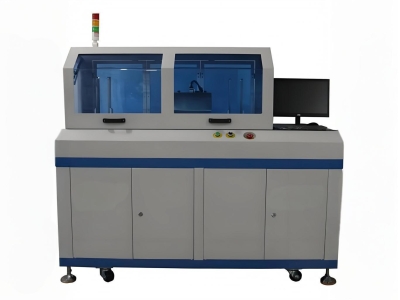 IC Card Data Verification Mach
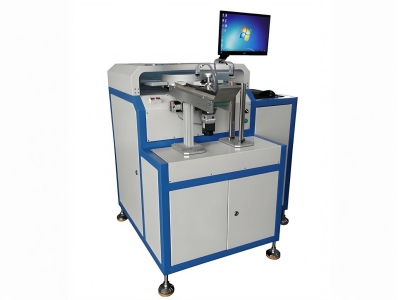 Non-Standard Contactless Card
 How to Choose a Smart Card Pro
Dual-Interface vs Contact Smar
How to Choose a Smart Card Pro
Dual-Interface vs Contact Smar
Please contact us with your request
We are ready to answer your questions.