
Auto Wire Embedding Machine 2-in-1: Dual-Function RFID Antenna Embedding Equipment
Auto Wire Embedding Machine (2-in-1 System): Dual-Function RFID Antenna Embedding Equipment Explained
Published: July 17, 2026 | Category: Smart Card Production Line
Wire embedding is a cornerstone process in smart card and RFID inlay manufacturing. It involves precisely placing fine copper wires (typically 25-50 micrometers in diameter) onto a substrate following a predetermined antenna pattern, then securing them through ultrasonic welding or thermal bonding. The Auto Wire Embedding Machine (2-in-1 System) advances this technology by combining two distinct embedding functions -- straight wire and coil wire processing -- within a single programmable platform. This dual-function capability allows manufacturers to handle diverse product requirements without investing in separate dedicated machines.
The Two Modes: Straight Wire vs. Coil Wire Embedding
Understanding why both functions matter helps clarify the 2-in-1 system's value proposition:
Mode A: Straight Wire Embedding
Straight wire embedding lays linear wire segments along defined paths on the substrate. This mode is primarily used for:
- UHF antenna dipole elements (long straight traces)
- HF loop antenna straight segments
- Interconnect bridges between coil sections
- Retail EAS label antenna patterns
Key advantage: Higher throughput for simple geometries. Wire tension and lay-down speed are optimized for linear paths rather than tight curves.
Mode B: Coil Wire Embedding
Coil wire embedding creates tightly curved or spiral antenna loops with sub-millimeter bend radii. Essential for:
- HF (13.56 MHz) inductive coupling coils
- NFC antenna spirals (small form factor)
- Contactless smart card primary coils
- Biometric passport antenna windings
Key advantage: Precise radius control maintains consistent inductance values. Specialized wire-guide rollers prevent kinking at sharp bends.
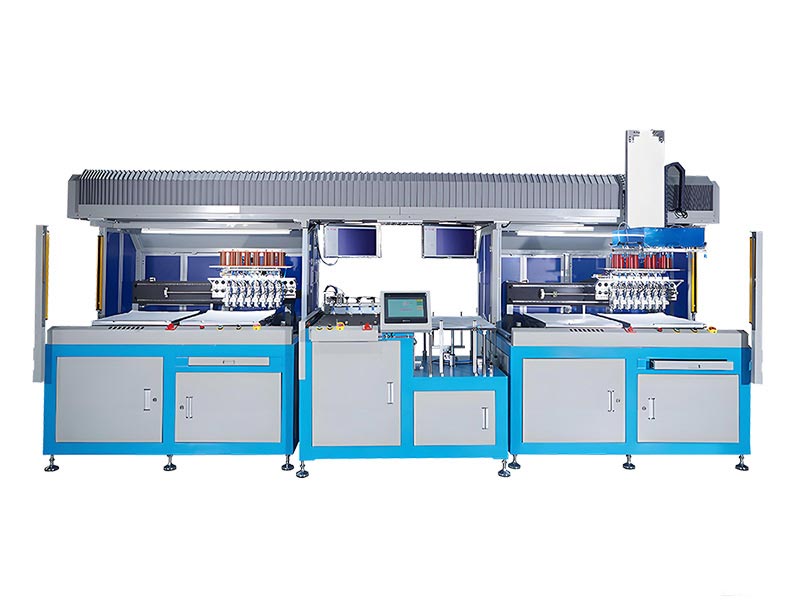
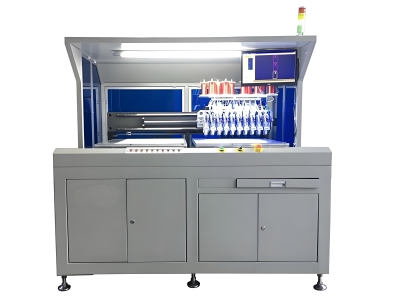
Figure 1: Auto Wire Embedding Machine (2-in-1 System) featuring dual-mode wire processing for both straight and coiled antenna patterns
System Architecture and Key Components
Wire Feed Mechanism
Precision servo-driven payoff spools with closed-loop tension control. Supports wire diameters from 15 um to 80 um (AWG 52 to AWG 38). Tension range: 5gF to 200gF adjustable.
XY Gantry Positioning
High-speed linear motor gantry with 5 um positioning resolution. Maximum travel speed: 800 mm/s acceleration. Repeatability: +/- 10 um over full work area (up to 250 x 350 mm).
Ultrasonic Bonding Head
20 kHz - 40 kHz ultrasonic transducer with amplitude control (10 - 80 microns peak-to-peak). Bonding force: 0.5N - 10N programmable. Creates metallurgical bonds without damaging substrate.
Vision Alignment System
CCD camera with sub-pixel pattern recognition. Aligns wire start/end points to substrate fiducial marks within +/- 15 um. Auto-compensates for thermal drift during long runs.
Dual Wire-Guide Assembly
Interchangeable guide rollers optimized for straight-path (low friction ceramic V-groove) and coil-path (precision ball-bearing ring) operation. Quick-change mechanism under 60 seconds.
Software Control Suite
Pattern import via DXF/Gerber/DXF files. Built-in library of 200+ standard antenna templates. Parameter tuning per segment (speed, tension, bonding power). Full production logging and SPC dashboard.
Technical Specifications
Production Workflow: How the 2-in-1 System Operates
- Pattern Import: Operator loads antenna CAD file (DXF, Gerber, or proprietary format). Software automatically segments the pattern into straight and curved regions, recommending optimal mode assignment.
- Substrate Loading: Sheet-fed or roll-to-roll substrate enters the work area. Vacuum chuck secures the sheet flat against the platen. Vision system locates fiducial markers for coordinate registration.
- Wire Threading & Setup: Wire spool is loaded onto the payoff. Operator threads through tension sensor, pre-tensioner, and guide assembly. System performs automatic wire diameter calibration.
- Embedding Execution: The XY gantry moves the bonding head along the programmed path. For straight segments, Mode A engages (high speed, low curvature). When the path transitions to a curve, Mode B activates (coil guide engaged, reduced speed, enhanced radius control). The transition is seamless within the same antenna pattern.
- In-Process Monitoring: Real-time sensors track wire tension, bonding amplitude, and positional deviation. Any out-of-spec condition triggers an immediate pause with operator alert.
- Unloading: Completed substrate advances to the output stacker. Production log records all parameters for traceability.
Economic Benefits of the Dual-Function Approach
Common Applications and Target Markets
Contactless Smart Cards
Bank payment cards (Visa/Mastercard payWave/payPass), transit fare cards, government ID credentials
RFID Inlay Sheets
Retail apparel labels, logistics tracking tags, asset identification labels, library book tags
E-Passport & e-ID
Biometric passport datapage antenna inlays, national identity card antenna structures
Automotive Key Fobs
PEPS (Passive Entry Push Start) antenna inlays, tire pressure sensor antennas
Medical Device Tags
Hospital wristband antennas, pharmaceutical tracking labels (compliant with FDA UDI requirements)
NFC Products
NFC stickers, smartphone accessory tags, smart poster antennas, brand authentication labels
Installation, Training, and Support
Zowinda provides comprehensive support for the Auto Wire Embedding Machine (2-in-1 System):
- Site Survey: Our engineers assess your facility layout, power infrastructure, compressed air quality, and EMI environment to ensure optimal installation conditions.
- Installation & Commissioning: Includes mechanical leveling, electrical hookup, pneumatic connections, software installation, and initial calibration. Typical installation timeline: 3-5 business days. li>Operator Training: Hands-on training covers machine operation, pattern programming, routine maintenance, basic troubleshooting, and safety procedures. Training certificate provided upon completion.
- Warranty Coverage: Standard 12-month warranty covering all mechanical and electronic components. Extended warranty plans available up to 36 months with priority response SLAs.
- Spare Parts Kit: Recommended startup kit includes extra wire guide rollers, ultrasonic horns, bonding tips, vision system lighting modules, and commonly replaced electromechanical parts.
Upgrade Your Wire Embedding Production Today
Get in touch for pricing, technical specifications, or to schedule a demonstration of the 2-in-1 dual-function system in action.
Email: [email protected]
WhatsApp: +86 186 2085 0485
 Auto COB Pick and Placer Machi
 Auto Hole Punching Machine – P
 Auto Sheet Shearing Machine -
 Auto Antenna Embedding Machine
Please contact us with your request
We are ready to answer your questions.