
Smart Card Cavity Milling Machine 2026 | Zowinda
Smart Card Cavity Milling Machine 2026 | Zowinda
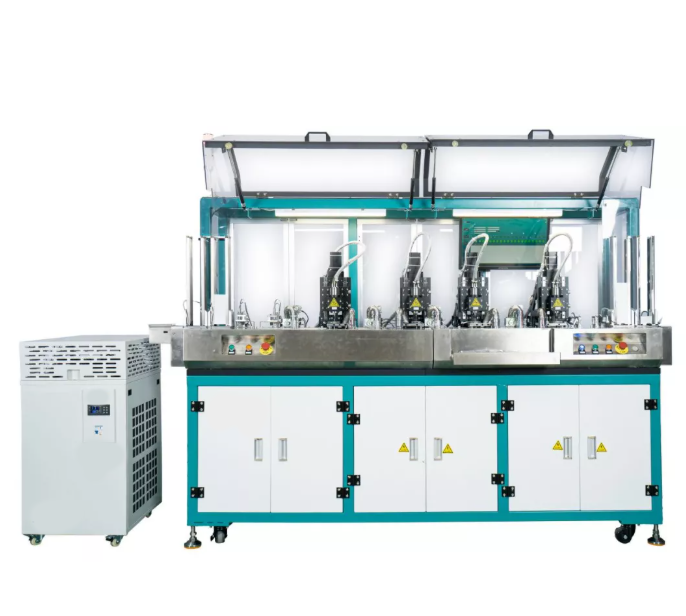
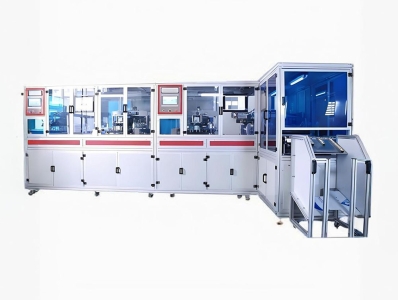
Creating precise chip module cavities in smart card inlays is one of the most accuracy-sensitive steps in card manufacturing. The Zowinda Smart Card Cavity Milling Machine automates this process with CNC servo control, delivering the positional accuracy and repeatability that contact, contactless, and dual-interface card producers need. This 2026 guide explains how smart card cavity milling works, why +/-0.02 mm matters, and what to look for when specifying a cavity mill for your line.
Whether you produce banking cards, ID documents, transport tickets, or telecom SIM substrates, clean cavity geometry protects the chip module, improves lamination quality, and reduces downstream rejection. Below we cover the technology, specifications, and operating advantages.
What Is Smart Card Cavity Milling
Cavity milling, also called cavity machining or chip pocket milling, is a subtractive process that cuts recessed areas into card inlay substrates. These pockets hold IC chip modules before lamination, creating the foundation for contact and dual-interface cards.
Unlike slot milling which cuts through finished cards, cavity milling works on flexible inlay sheets. It must control depth, wall angle, and position simultaneously because the chip module must sit flush and remain electrically connected after lamination.
Why Cavity Accuracy Drives Card Yield
A cavity that is too shallow leaves the module protruding, risking delamination or contact wear. A cavity that is too deep weakens the card body and can crack under flexing. Positional error causes the chip pad to misalign with the contact area, creating electrical failures that are expensive to catch at final test.
- Flush mounting: Correct depth keeps the module level with the card surface for reliable contact and clean graphics.
- Antenna integrity: Precise pocket geometry avoids cutting into embedded antennas in dual-interface inlays.
- Lamination bonding: Uniform cavity walls create consistent adhesive flow and eliminate voids.
- Scrap reduction: Tight tolerances reduce rejects at electrical test and visual inspection.
How the Zowinda Cavity Milling Machine Works
The machine combines a CNC servo stage, high-speed spindle, and CCD vision registration. The typical workflow is:
- Sheet feed: The inlay sheet is loaded and aligned to registration marks or fiducials.
- Vision capture: A CCD camera reads sheet position and calculates offset and rotation.
- CNC milling: The servo-driven spindle cuts the programmed pocket geometry into the substrate.
- Vacuum extraction: Chips and debris are removed continuously to protect the cutting area.
- Optical check: An inline inspection station verifies cavity dimensions and rejects out-of-spec sheets.
Recipe storage allows operators to recall standard cavity patterns quickly, and custom shapes can be created through the touchscreen HMI for specialty modules.
Technical Specifications
| Parameter | Specification |
|---|---|
| Cavity Position Accuracy | +/-0.02 mm (CNC servo-controlled) |
| Depth Control Precision | +/-0.01 mm repeatability |
| Throughput | Up to 3,000 inlays/hour |
| Material Support | PVC, PET, PETG, polycarbonate composite sheets |
| Cavity Patterns | Rectangular, oval, custom programmable shapes |
| Tool System | High-speed carbide end mills, auto tool changer option |
| Operating Mode | Fully automatic continuous operation with magazine feed |
Production Benefits
- CCD vision alignment: Compensates for material stretch and feed variation before each cut.
- Vacuum chip removal: Keeps the cutting zone clean to protect downstream lamination.
- Fast program change: Standard cavity patterns can be recalled and new shapes saved in minutes.
- In-line quality control: Optical inspection measures every cavity and rejects non-conforming parts automatically.
- Material flexibility: Handles common inlay substrates without mechanical retooling.
Frequently Asked Questions
What is the difference between cavity milling and slot milling?
Cavity milling creates recessed pockets in inlay sheets to receive IC chip modules before lamination. Slot milling cuts through-holes or channels in finished cards. The two processes run at different stages of the card manufacturing flow.
What cavity sizes and depths are supported?
The machine supports standard chip module packages including SO-8, SON-8, MLP/QFN, and custom outlines up to 20 mm x 30 mm. Depths are programmable from 0.1 mm to 0.8 mm in 0.01 mm increments.
How does the vision system improve accuracy?
A CCD camera captures fiducials or registration marks on each sheet. The CNC controller applies calculated offset and rotation corrections in real time, maintaining +/-0.02 mm positional accuracy despite handling tolerances.
Can the machine handle different inlay materials?
Yes. It processes PVC, PET, PETG, polycarbonate composites, and paper-based inlay materials. Spindle speed and feed parameters are stored per material in the program library.
Where does cavity milling fit in the production line?
Cavity milling typically follows inlay preparation and precedes module embedding and lamination. It pairs well with an automatic contactless card inlay line and a GSM card personalization machine for a complete card production workflow.
Get a Quote for Your Cavity Milling System
If you are expanding smart card or RFID inlay capacity, contact Zowinda to discuss cavity milling specifications, integration layout, and throughput targets.
Email: [email protected] | WhatsApp: +86 186 2085 0485
 Full Auto Milling & Implan
 Non-Standard Contactless Card
 Smart Card Inspection System -
 Revolutionizing Card Productio
Please contact us with your request
We are ready to answer your questions.