
Smart Card Personalization & Encoding System | Multi-Station Automated Card Processing Line
Smart Card Personalization & Encoding System | Multi-Station Automated Card Processing Line
Published: July 23, 2026 | Zowinda Technology
In the competitive landscape of smart card manufacturing, investing in the right equipment directly impacts production efficiency, product quality, and profitability. This comprehensive guide explores Zowinda's Smart Card Personalization & Encoding System, covering its working principles, technical specifications, key advantages, and how it integrates into modern card production lines.
What Is a Card Personalization System?
A Smart Card Personalization & Encoding System is the final-stage equipment that transforms blank smart cards into individually programmed, printed, and verified finished products. In a single integrated line, the system handles multiple operations: magnetic stripe encoding (HiCo/LoCo), IC chip data writing (contact and contactless), thermal color printing, embossing, topping (overlay application), and quality verification. Each card passes through sequential stations, with each station performing its specialized task before passing the card to the next.
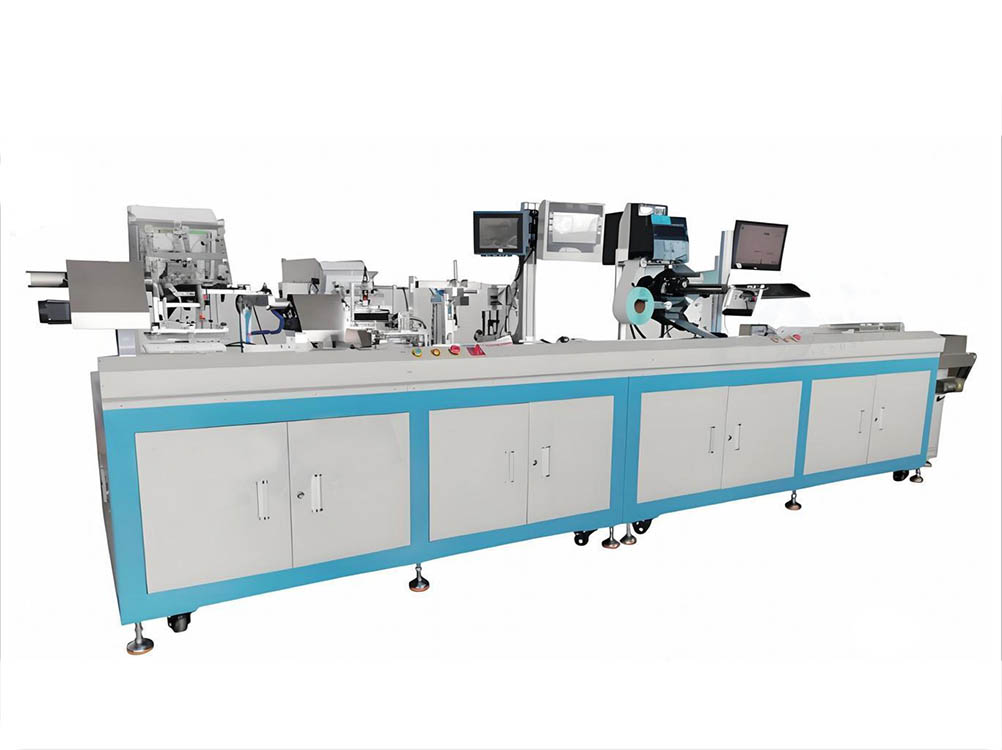
Smart Card Personalization & Encoding System — Multi-Station Integrated Card Processing Line
Multi-Station Processing Architecture
The system architecture follows a modular conveyor-based design where each processing station operates independently yet synchronously:
• Feeding Station: Blank card hopper with capacity for 500+ cards, singulation mechanism
• Magnetic Stripe Encoder: ISO 7811 compliant HiCo/LoCo encoding with verification
• IC Contact Station: T=0/T=1 protocol support for EMV chip personalization
• Contactless Encoder: RFID/NFC writing for dual-interface cards
• Thermal Printer: 300–600 DPI color/dual-sided printing
• Embossing Unit: Character embossing for legacy card formats
• Overlay Applicator: Protective film lamination
• Verification Station: Full electronic and visual QC check
• Output Stacker: Sorted good/reject bins
Production Efficiency & Quality Control
Designed for medium-to-high volume production environments, this personalization line achieves throughput rates of 500–1,000 cards per hour depending on configuration. Real-time quality monitoring at each station captures statistical process control (SPC) data, enabling predictive maintenance alerts and continuous yield improvement. The open architecture supports integration with host systems via TCP/IP, RS-232, and industry-standard personalization protocols.
Key Features & Advantages
✓ All-in-One Processing
Magstripe + IC + NFC + print + emboss + overlay in one line
✓ High Throughput
500–1,000 CPH depending on configuration
✓ Protocol Support
EMV, ISO 7816, ISO 14443, ISO 7811
✓ Integration Ready
TCP/IP, RS-232, SDK available for host connectivity
Technical Specifications
Ready to Upgrade Your Production Line?
Contact us for customized solutions, pricing, and technical consultation.
Email: [email protected]
WhatsApp: +86 186 2085 0485
 Revolutionizing Card Productio
 Unlock Precision and Efficienc
 Product Webpage Promotion Copy
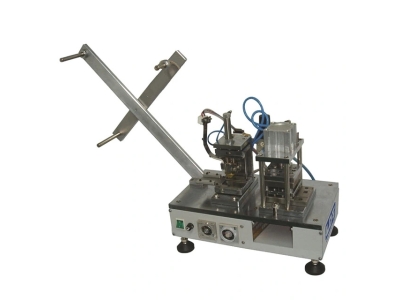 Manual IC Module Punching Mach
Please contact us with your request
We are ready to answer your questions.