
Dual-Station Auto Wire Embedding Machine Revolutionizes RFID Inlay Production with Parallel Processing Throughput
Dual-Station Auto Wire Embedding Machine Revolutionizes RFID Inlay Production with Parallel Processing Throughput
Published: July 14, 2026 · Category: Industry News
RFID inlay demand continues to surge across retail inventory management, supply chain tracking, contactless payment, and asset identification applications. Each inlay requires an antenna coil precisely embedded onto a substrate -- a step that traditionally limits line speed to the rate of a single embedding head. The Dual-Station Auto Wire Embedding Machine breaks this bottleneck by operating two fully independent embedding stations in parallel, effectively doubling throughput without sacrificing the micron-level accuracy that defines premium inlay quality.
Why Parallel Station Architecture Matters
Conventional single-head embedders process substrates sequentially: load, position, embed, unload. Even at peak efficiency, this creates idle time during substrate indexing and unloading. The dual-station design overlaps these non-value-added motions: while station A completes its embedding cycle, station B loads the next substrate and indexes into position. The result is near-continuous material flow with both heads working simultaneously. For manufacturers producing HF inlays for library tags, NFC stickers, or UHF labels for logistics, this architecture can increase effective daily output by 80-100% compared to single-head machines occupying the same floor footprint.
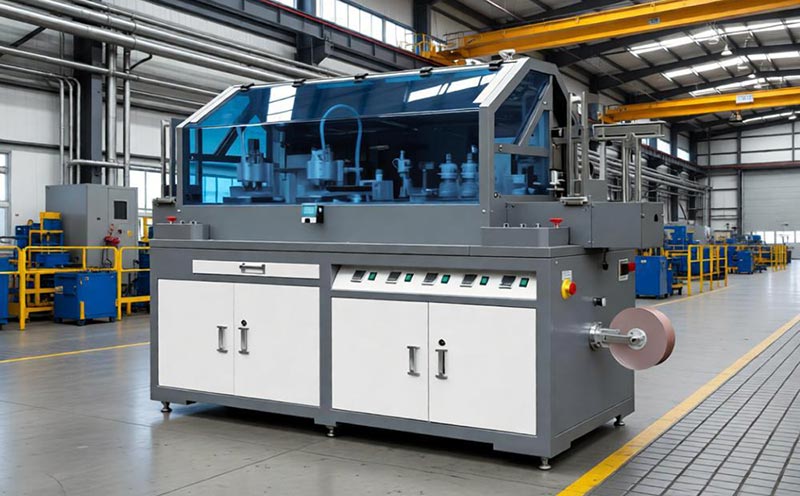
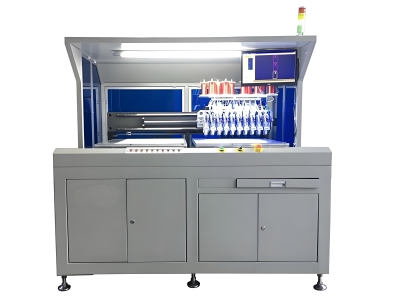
Zowinda Dual-Station Auto Wire Embedding Machine -- parallel twin-head design doubles RFID inlay throughput with precision.
Core Capabilities
Six engineered capabilities define this solution:
True Parallel Operation
Two independent servo-driven embedding heads operate simultaneously, each with its own vision alignment system and tension controller.
Independent Vision Alignment
Each station has its own camera system for substrate fiducial detection and antenna pattern registration, ensuring no cross-talk or shared-resource delays.
Dynamic Load Balancing
When one station finishes faster (e.g., smaller antenna pattern), the feeder system automatically prioritizes it for the next substrate, maximizing overall OEE.
Quick-Change Tooling
Both stations share common tool-change protocols; switching from HF to UHF antenna patterns takes under 15 minutes with preset recipe recall.
Closed-Loop Tension Control
Real-time tension monitoring on both stations prevents wire sag, bird-nesting, and over-tension breakage independently per head.
Statistical Yield Dashboard
Per-station yield, uptime, and defect-type histograms displayed on a unified HMI screen for instant production visibility.
Technical Specifications
Target Applications and Market Fit
This machine serves high-volume RFID inlay converters who have outgrown single-head capacity but lack floor space for two separate machines. It is ideal for NFC sticker producers, UHF label printers with integrated inlay manufacturing, and smart-label converters serving retail apparel, pharmaceutical anti-counterfeiting, and airline baggage tracking markets. The dual-station configuration also provides built-in redundancy: if one head requires maintenance, the other continues production at reduced capacity rather than stopping the line entirely.
Ready to Boost Your Production Efficiency?
Contact us for a tailored solution and quotation.
Email: [email protected]
WhatsApp: +86 186 2085 0485
 Auto COB Pick and Placer Machi
 Auto Hole Punching Machine – P
 Auto Sheet Shearing Machine -
 Auto Antenna Embedding Machine
Please contact us with your request
We are ready to answer your questions.