
Sustainable Smart Card Manufacturing: Recycled Substrates, rPVC and ESG Compliance
Sustainable Smart Card Manufacturing: Recycled Substrates, rPVC and ESG Compliance
Publish date: 2026-09-13
Smart cards have always been made from virgin PVC, but buyers and regulators now ask where that plastic comes from and where it goes. Recycled PVC (rPVC), bio-based PET-G and take-back schemes are moving from green marketing into procurement requirements. This guide explains what sustainable card materials actually deliver on the production line, and what ESG compliance demands of a card maker today.
Why the Substrate Is Now a Compliance Question
A card body is mostly plastic, and plastic is now scored. Corporate buyers publish ESG targets, payment schemes set recycled-content goals, and some regions restrict single-use PVC in favour of recycled or bio-based alternatives. For a card manufacturer this is no longer a brochure line - it changes the bill of materials, the supplier audit, and the documentation a customer's sustainability team will request before signing. The material choice that used to be a cost decision is now a compliance decision too.
The Three Sustainable Substrate Options
The practical routes to a lower-impact card are recycled PVC (rPVC), bio-based or recycled PET-G, and mechanically recycled offcuts fed back into the line. rPVC reuses post-industrial or post-consumer vinyl, cutting virgin resin use while keeping the same lamination behaviour most lines already know. Bio-PET-G swaps fossil feedstock for plant-derived monomer but must still survive the heat and pressure of lamination. Closed-loop offcut recycling is the quiet winner on the factory floor: the skeleton from die-cutting goes back into sheet, lowering waste without changing the resin chemistry at all.
- rPVC: reuses vinyl, keeps familiar lamination behaviour, lowers virgin resin.
- Bio-PET-G: plant-derived, must still survive lamination heat and pressure.
- Closed-loop offcuts: factory skeleton re-ground into sheet, cuts waste at source.
✔ Recycled PVC
Lowest friction: same process, documented recycled content.
✔ Bio-based PET-G
Renewable feedstock, verify lamination and colour stability.
✔ Take-back scheme
Recovers end-of-life cards for re-grind or energy recovery.
What ESG Compliance Actually Demands
Buying a greener resin is only half of it. ESG compliance means proving the claim: chain-of-custody certificates for the recycled content, a mass-balance or segregated accounting method the auditor accepts, and a carbon or footprint figure backed by data rather than assertion. A card maker also needs to show waste handling, energy use per sheet, and a plan for end-of-life recovery. The document trail matters as much as the pellet in the hopper, and customers increasingly request it before the first order.
- Chain-of-custody certificates for any recycled content claim.
- Mass-balance or segregated accounting the auditor will accept.
- Waste, energy and recovery data, not just a greener resin.

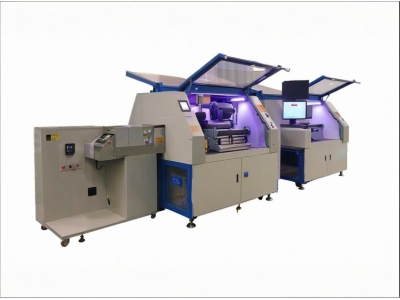
Card production line running recycled-content substrates, with offcut recovery feeding material back into the process.
Trade-offs on the Production Line
Greener is not free of friction. rPVC can carry more colour variation batch to batch, so print colour management needs tighter tolerances; bio-PET-G may need a different lamination temperature window; and recycled content can raise questions about long-term delamination if the feedstock is poorly sorted. None of these is a blocker, but each is a parameter the process engineer must characterise rather than assume. The card that is sustainable on paper must still laminate, print and survive a wallet for years.
- rPVC: tighter colour control for batch-to-batch variation.
- Bio-PET-G: re-characterise the lamination temperature window.
- Sort quality: poor feedstock risks long-term delamination.
Selection Quick Reference
Sustainable card manufacturing is achievable today with rPVC, bio-based PET-G or simple offcut recycling, but the material is only as credible as the paperwork behind it. Choose the option that fits your line with the least re-qualification, build the chain-of-custody and energy data the auditor expects, and the card that is greener in the brief will also be greener - and compliant - in the field.
Ready to improve your production efficiency?
Contact us for a tailored solution and quotation.
Email: info@zowinda.com
WhatsApp: +86 186 2085 0485
 How Smart Cards Are Made: Proc
Smart Card Production Line Lay
RFID Inlay Encoding Calibratio
Sustainable Smart Card Manufac
How Smart Cards Are Made: Proc
Smart Card Production Line Lay
RFID Inlay Encoding Calibratio
Sustainable Smart Card Manufac
Please contact us with your request
We are ready to answer your questions.